
Classic Pool 3D: 8 Ball
C.C.T GamesSports
3.8523.00 Reviews
- Version
- 1.2.9
- Installs
- 10.00M
- Age Rating
- Teen
Screenshots
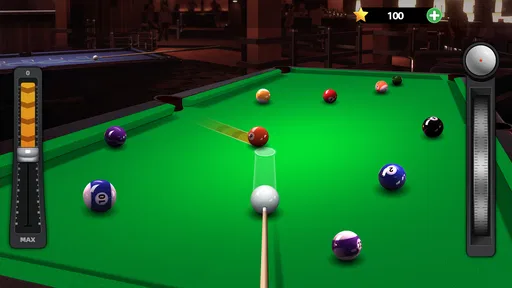
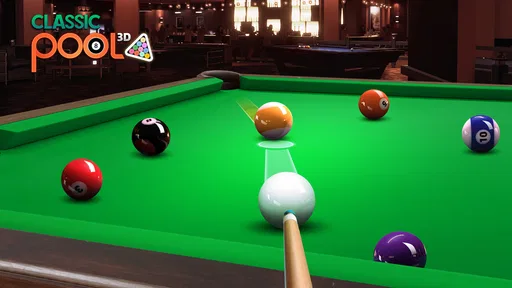
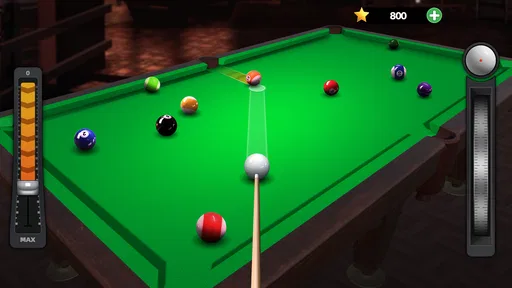
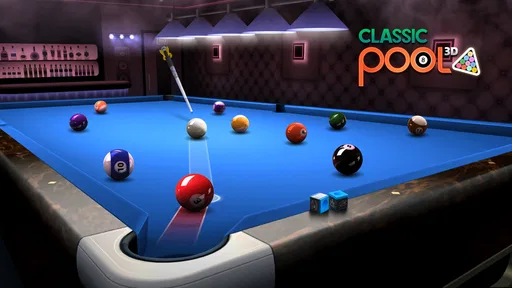
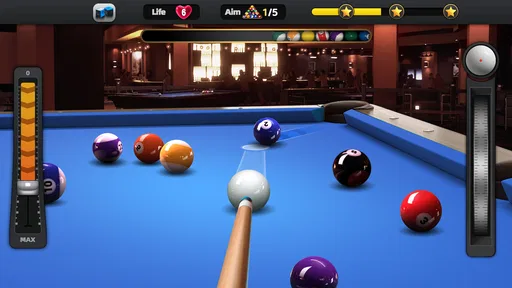
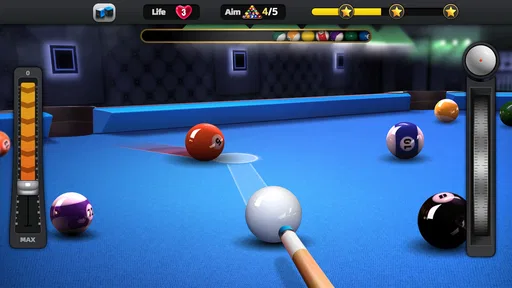
Our Review of Classic Pool 3D: 8 Ball
 Analysis by Appyee
I spent time with Classic Pool 3D: 8 Ball as a casual sports game, and my first impression was straightforward: it wants to make a familiar pool table easy to pick up on a phone. That simplicity is its main appeal. I can open it for a short session, line up a shot, and get into the rhythm of aiming without first learning a complicated control system.
It is a free game from C.C.T Games, aimed at players who enjoy digital billiards rather than people looking for a full simulation of tournament pool. The Teen content rating is worth keeping in mind, especially if you are choosing games for a younger player. The game has attracted over ten million installs and holds a 3.8 average from around nineteen thousand ratings, which suggests a broad audience but also a mixed experience rather than universal approval.
How the first games establish a reason to keep playing
The early goal is refreshingly clear: make better shots and finish the table. There is no need to decode a large set of menus before playing. The familiar eight-ball format gives each turn an immediate purpose, whether I am trying to sink an easy ball, open up a blocked group, or plan the next position for the cue ball.
That clarity matters on a touchscreen. Pool is already a game of visible angles and deliberate choices, so the best mobile version is one that lets me concentrate on the table instead of fighting the interface. Classic Pool 3D: 8 Ball generally works best when I slow down, inspect the line, and treat each shot as a small puzzle rather than tapping quickly.
My first useful adjustment was to stop aiming only at the target ball. A shot can look successful and still leave the cue ball in a poor place for the next turn. Even in a short session, I found more satisfaction when I considered the follow-up position before committing. That makes the game feel less like a sequence of isolated taps and more like a compact exercise in planning.
The 3D presentation helps with that basic readability. I can view the table as a space instead of a flat diagram, and the perspective gives shots a little more presence. At the same time, a three-dimensional view can make an angle feel less obvious than it would on a real table. I recommend taking an extra moment to check the projected path instead of trusting the first visual impression.
For someone who has never played pool on a phone, this is a friendly starting point. The rules are recognizable, the objective is easy to explain, and a new player can learn through ordinary play. For an experienced billiards player, the attraction is different: it is a convenient way to rehearse shot selection and enjoy the basic flow without setting up a physical table.
Small decisions make the opening more interesting
The strongest early habit is choosing safety over ambition when the table is difficult. A spectacular shot is tempting, but forcing a low-percentage attempt can hand control to the opponent or ruin the layout. When the balls are crowded, I get better results by looking for a simple contact or a shot that leaves the cue ball in a usable area.
Another practical tip is to separate aiming from power. I first decide where the object ball needs to go, then adjust strength. Trying to solve both problems at once often leads to overpowered shots. The game becomes more enjoyable when I use short, controlled movements for position and reserve stronger shots for open paths.
This is also where the game’s casual identity becomes clear. It encourages the feel of pool, but it does not replace the tactile feedback of a cue, the sound of a real break, or the physical judgment involved in standing around a table. If you want a serious training tool, a more specialized billiards simulator may suit you better. If you want a quick digital table, the lighter approach is easier to live with.
Progress signals and the shape of a session
Progress in a pool game is not only about unlocking something visible. I notice it in the quality of my decisions. Early on, I focus on sinking the ball in front of me. After a few rounds, I start reading clusters, planning the cue-ball route, and avoiding pockets that make the next shot awkward. That improvement is subtle, but it gives repeat sessions a purpose even when I am not chasing a large objective.
The clearest progress signal is a cleaner run through the table. When I can connect several shots without losing control, I know I am reading angles more accurately. A successful break also changes the entire session: an open layout invites an attacking approach, while a messy spread rewards patience. I like that the table itself can create a different problem from one turn to the next.
Players should not expect every session to feel like a steady climb. Pool naturally includes failed attempts, unlucky contacts, and layouts that become difficult after one mistake. That unevenness is part of the sport, but it can also make the game feel less rewarding if you prefer constant, clearly displayed advancement.
In my experience, the best way to create a personal progression loop is to set a narrow goal before playing. One session might be about avoiding scratches. Another might focus on leaving the cue ball near the center. A third could be about taking fewer risky shots. These goals turn ordinary matches into practice without pretending that every round needs a new reward.
The game’s free price makes this kind of experimentation easy. I can try it during a spare moment without committing money first. That is useful for casual players who are unsure whether mobile pool will hold their attention. It also means I judge the experience mainly by how well the basic play keeps me interested, not by the promise of a large long-term campaign.
What the version and platform mean in daily use
The current version is 1.2.9, and the minimum requirement is Android 6.0. On a compatible device, that broad operating-system support makes it accessible to people who are not using a recent phone. I would still prefer a reasonably responsive screen, because precise aiming is much less comfortable when touch input feels delayed or cramped.
A typical use case is a short break between errands. I can play a few turns, put the phone away, and return later without needing a long explanation of the controls. It also works for a relaxed evening when I want something more interactive than watching a video but less demanding than a fast action game.
That convenience has a trade-off. A quick session can easily become repetitive if I approach every table in exactly the same way. The game is most engaging when I actively vary my priorities: attack when the layout is open, defend when the odds are poor, and treat position as seriously as the pocket itself.
Difficulty, mistakes, and the pace of challenge
The difficulty curve feels tied more to decision quality than to reflexes. I do not need rapid fingers to play well; I need patience and a willingness to reconsider a shot. That makes the game approachable for players who dislike twitch-based sports titles, but it can feel slow for anyone expecting constant action.
At the beginning, a player can concentrate on direct shots and simple combinations. Later, the challenge comes from managing the table after imperfect contact. A ball may be close to a pocket but blocked by another ball, or the obvious target may be easy while the next position is terrible. These situations are where the game asks for more than basic aiming.
My biggest source of failure was overconfidence after a good opening. A clear first shot can create the impression that the whole rack will be easy. In practice, I had to preserve options instead of immediately choosing the most attractive pocket. Leaving one difficult ball for the end can turn a comfortable position into a frustrating finish.
There is also a mental difficulty curve. When I miss, the mistake is usually understandable after I replay the shot in my head. I aimed too thin, used too much power, or ignored the cue-ball route. That makes losses useful, but only if I resist the urge to rush into another attempt. Taking a few seconds to identify the error is more valuable than simply repeating the same movement.
Players who want a demanding competitive environment may find the pacing too gentle or the challenge too dependent on personal discipline. A dedicated online pool game, a rules-focused simulator, or a physical table will offer a stronger sense of competition in different ways. This title is better suited to people who want a manageable solo-style sports experience on a phone.
Three practical techniques that improve the experience
Plan the second shot before taking the first. I look for the likely landing area of the cue ball, not just the pocket. This prevents many runs from collapsing after an apparently successful opening.
Use the table edges as part of the plan. When a direct route is blocked, a controlled bank can open a path, but I only choose it when the angle is clear. Banking every difficult ball is exciting but usually less reliable than waiting for a simpler opportunity.
Change the session objective after a mistake. If I lose control early, I stop chasing a perfect run and focus on recovering the layout. This keeps one bad shot from turning the rest of the match into careless attempts.
These techniques are not complicated, but they reveal the game’s most worthwhile layer. The table gives immediate feedback, and the player can improve without needing a long tutorial. That is a good fit for a casual sports game, provided the player enjoys learning through repetition rather than unlocking content at a rapid pace.
Retention pressure: what brings me back and what may not
The main reason I return is the short decision cycle. Each turn presents a visible problem, I make a choice, and the result is immediate. That structure is naturally suitable for mobile play. I can finish a small objective in a few minutes, or stay longer when the table develops into an interesting run.
The familiar eight-ball format also gives the game an advantage over more abstract sports titles. I already understand what a good turn looks like, so the satisfaction comes from execution. There is no need to learn a fictional sport or remember a large set of special abilities before the match becomes meaningful.
However, the same familiarity can limit long-term retention. Once the novelty of the 3D table wears off, the game needs my own goals to remain fresh. Players who depend on frequent unlocks, elaborate progression screens, or a strong narrative reason to return may find the loop thin. I would not choose this as my main game if I wanted a deep career mode or a constantly changing set of activities.
The store summary presents it as a classic pool game with a singer player, but I judge it primarily by the table experience. The important question for me is whether the shot-making remains enjoyable after the first few sessions. It does when I approach each rack thoughtfully; it does less when I simply repeat safe-looking shots without considering the layout.
Its 523 reviews show that many people have taken the time to comment, while the overall rating of 3.8 indicates that the experience has clear appeal alongside noticeable friction for some players. I read that combination as a reason to keep expectations realistic. This is a free, accessible pool option, not a guaranteed replacement for every other billiards game.
Who should play it, and who should skip it
I would recommend it to someone who wants a recognizable sports game for brief sessions, enjoys aiming and planning, and prefers a slower pace over rapid reactions. It is especially suitable for a player who has never tried mobile pool and wants to learn the basic rhythm without paying upfront.
I would also suggest it to casual billiards fans who like testing different shot choices. The game rewards attention to angles and cue-ball placement enough to make ordinary matches feel purposeful. It can be a pleasant companion during a commute or a quiet evening, as long as the player is comfortable with a relatively focused loop.
I would skip it if your priority is a highly realistic simulation, a rich competitive scene, or a clearly layered progression system. A physical table is better for tactile practice, while a more specialized pool title may be preferable for detailed rules, advanced training, or stronger multiplayer structure. I would also avoid it if you dislike games where improvement depends on repeating similar situations.
For families, the Teen rating means I would check whether it fits the intended player before installing it. The label does not make the game unsuitable for everyone, but it is a useful reminder not to treat it automatically as a children’s title.
My progression verdict after playing
Classic Pool 3D: 8 Ball succeeds when it keeps the focus on the small satisfaction of a well-planned shot. Its early goals are understandable, its progress is most visible through better table reading, and its difficulty grows when I start thinking about position instead of only pockets. That is a sound foundation for a casual mobile sports game.
The pacing is at its best in short, self-directed sessions. I can play a few turns without feeling that I need to invest an entire evening, yet a complicated rack can still hold my attention. The trade-off is that the game does not appear to provide enough variety on its own for every type of player. Long-term interest depends heavily on whether I enjoy setting personal challenges and refining technique.
My strongest recommendation is to play deliberately. Do not judge it after a rushed first match, and do not expect every improvement to arrive as an obvious unlock. Watch how the cue ball behaves, notice which angles cause trouble, and use each failed shot as information. That approach uncovers more depth than the simple presentation initially suggests.
In the end, I see this as a convenient, free introduction to phone-based pool rather than a definitive billiards simulator. C.C.T Games has built something approachable for quick play, with enough tactical thinking to reward patience. If you want a simple table, familiar rules, and room to improve your shot choices, it is worth trying; if you need deep progression or serious competitive realism, choose a more specialized alternative.
Verdict
Strengths of Classic Pool 3D: 8 Ball
- Realistic 3D tables make aiming and bank shots feel immersive.
- Simple controls are easy for beginners to learn quickly.
- Multiple game modes provide variety beyond standard 8-ball matches.
- Offline play lets you enjoy matches without a constant internet connection.
- Short games are convenient for quick breaks or casual sessions.
Limitations of Classic Pool 3D: 8 Ball
- Some tables and features may require progress or purchases to unlock.
- The physics can occasionally feel inconsistent on difficult shots.
- Computer opponents may become predictable after extended play.
- Ads can interrupt the experience, especially between completed matches.
- Limited customization may disappoint players seeking deeper personalization.
Other Releases by C.C.T Games
View All
Soccer Master Shoot Star
Sports4.3
Similar Picks in This Category
View All
8 Ball Pool
Miniclip.com4.8

Pooking - Billiards City
AIM TOP GAME TECHNOLOGY LIMITED - pool4.6

Carrom Pool: Disc Game
Miniclip.com4.4

EA SPORTS FC Soccer Mobile 26
ELECTRONIC ARTS4.6

World Soccer League
mobirix4.3

Soccer Cup 2026: Football Game
INLOGIC SPORTS - football tennis golf soccer4.3
Frequently Asked Questions
What is Classic Pool 3D: 8 Ball, and how is the gameplay?
Classic Pool 3D: 8 Ball is a virtual billiards game focused on traditional eight-ball pool. From my experience, it offers straightforward controls, realistic table physics, and an easy-to-understand objective: pocket your assigned balls before sinking the eight ball. The game is suitable for casual players, although beginners may need a few matches to become comfortable with aiming, adjusting shot strength, and controlling the cue ball.
Can I play Classic Pool 3D: 8 Ball offline?
The game is primarily designed for quick pool matches and may support offline play depending on the version installed and the specific mode selected. Offline access is useful when you want to practice without an internet connection, but online features, advertisements, leaderboards, or multiplayer functions may require connectivity. It is worth checking the app’s current store description because offline availability can change after updates.
Does Classic Pool 3D: 8 Ball include multiplayer or online matches?
Classic Pool 3D: 8 Ball may provide competitive play against computer-controlled opponents and, depending on the release, online or local multiplayer options. The single-player experience is the most reliable way to practice your technique, while multiplayer can make matches more exciting and unpredictable. Before downloading, check whether the current version supports real-time online games, turn-based matches, or only offline opponents.
Is Classic Pool 3D: 8 Ball free to download and does it contain ads?
The game is generally available as a free download, allowing users to try the main pool experience without paying upfront. However, free mobile games commonly include advertising, and some versions may offer optional purchases or paid features. Ads can appear between matches or during menu navigation. Review the store listing and in-app purchase information before installing if you prefer an uninterrupted experience.
Is Classic Pool 3D: 8 Ball suitable for beginners and children?
The basic rules and controls are accessible, so beginners can start playing after a short practice period. The game does not require advanced gaming skills, although accurate aiming and power control take time to master. Parents should still review the current age rating, advertising practices, and any online communication or purchase options, particularly if the app will be used by younger children.
Play our best games!


